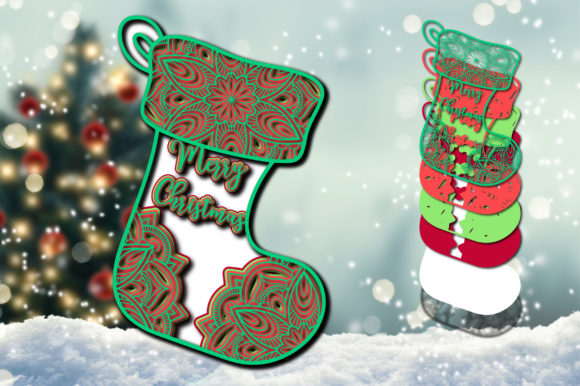
Review: 3D Christmas Present Gift Layered Design
As a designer who spends more time at the hoop than away from it, I approach every new digital embroidery file with a mix of excitement and skepticism. The market is flooded with holiday motifs, but finding one that translates well from a screen preview to a stitched finished product requires a keen eye. Recently, I evaluated the 3D Christmas Present Gift Layered design to see if it holds up for real-world embroidery project applications. This isn't just about whether it looks cute on a mockup; it's about how the layers interact, how the stitches lay down on various fabrics, and whether it adds genuine value to a craft business or handmade collection.
First Impressions and Visual Personality
When I first opened the files for 3D Christmas Present Gift Layered, the immediate takeaway was the depth potential. Unlike flat vector art that relies solely on color changes, this 3D SVG structure suggests a dimensional approach that is perfect for the holidays. The layout feels balanced, avoiding the clutter that often plagues complex seasonal designs. The "layered" aspect implies that this design is built to be assembled in stages, likely utilizing different thread colors or even fabric pieces to create shadow and height.
The mood it creates is festive yet sophisticated. It avoids looking like a childish cartoon, which makes it versatile enough for adult custom apparel as well as nursery decor. For an Etsy seller or boutique owner, this visual personality is crucial. You want a design that screams "holiday" without sacrificing the professional aesthetic your brand has worked hard to build. The clean lines and distinct separation between layers suggest that, when digitized correctly or used with the provided assets, it will result in crisp definition rather than a muddy blob of thread.
Real-World Application: The Holiday Tote Scenario
To truly test the viability of this design, I envisioned a specific client request: a set of custom reusable tote bags for a local bakery's holiday packaging. This is a common scenario for small shop product creators. The goal was to create something durable, washable, and visually striking. Using 3D Christmas Present Gift Layered on a canvas tote offers a great opportunity to play with texture.
In this context, the layered nature of the design shines. By treating the bottom layer as a base fill and the upper layers as accent details, you can create a sense of volume that mimics a wrapped gift sitting on the bag. If you are using this as an applique design, the separation of layers allows for precise fabric placement before stitching down the edges. This technique not only speeds up the stitching process by covering large areas with fabric but also adds a tactile element that customers love to touch. For a personalized gift or a batch of holiday embroidery items, this tactile quality elevates the perceived value of the item significantly.
However, one must consider the stitch density. A design labeled "3D" often implies heavy saturation. On a tote bag, this is generally fine, but if you were adapting this for a lighter weight fabric, such as a linen tea towel or a thin cotton shirt, you would need to be cautious. High density can lead to puckering or stiffness, which ruins the drape of the garment. Always test on scrap fabric that matches your final material to ensure the stabilizer you choose can handle the weight of the threads.
Navigating Fabric Challenges and Hoop Constraints
While 3D Christmas Present Gift Layered offers great visual appeal, it demands respect regarding where it is placed. Not every surface is ready for a multi-layered composition. For instance, applying this to a curved surface like a cap requires careful planning. The rigid structure of a stacked design might not conform well to the front panel of a hat without significant distortion. In such cases, simplifying the layers or reducing the overall size might be necessary to maintain clarity.
Similarly, textured fabrics like thick wool sweaters or fuzzy fleece can swallow small details. If the design relies on fine running stitches or tiny corners to define the ribbon or bow elements, these might get lost in the pile of the fabric. For sweatshirt embroidery, I recommend increasing the scale of the design slightly to ensure the details remain visible. Conversely, on dark fabrics, the contrast becomes your best friend. Ensuring your thread colors pop against the background is essential for the "3D" effect to register visually. A low-contrast choice here would flatten the design, negating the purpose of the layered structure.
Another critical factor is the hoop size. Layered designs often require a larger footprint to accommodate the registration marks and the full extent of the stacked elements. Before committing to a project, verify that your machine's hoop can handle the dimensions. Trying to squeeze a large, detailed design into a small hoop can lead to misalignment and frustration, especially when dealing with multiple stops for color changes or layer adjustments.
Commercial Viability and Brand Consistency
For those running a craft business, consistency is key. Does 3D Christmas Present Gift Layered fit within your existing catalog? If your brand focuses on minimalist, single-line art, this bold, layered look might feel out of place unless introduced as a special seasonal collection. However, for shops specializing in vibrant, detailed machine embroidery design work, this asset is a strong contender. It has the potential to become a signature look for your holiday lineup.
The design also performs well in printable mockup scenarios. Because the files typically include high-resolution PNGs with transparent backgrounds (as noted in the product details), you can easily create professional previews for your online store before ever stitching a single thread. This helps gauge customer reaction and can drive pre-orders. When customers see a high-quality representation of the embroidered patch or garment, their trust in your ability to deliver a premium handmade product increases.
Practical Designer Notes for Success
Before launching into production with 3D Christmas Present Gift Layered, keep these practical steps in mind to ensure the highest quality outcome:
- Test First: Always stitch a sample on scrap fabric identical to your final product. Check for puckering, thread breaks, and registration accuracy between layers.
- Check Licensing: Since this is an instant digital download, confirm the license terms. Ensure you are allowed to use it for commercial sales if you plan to sell finished items or incorporate it into design assets for others.
- Stabilizer Selection: Match your stabilizer to the fabric weight. Heavier designs often require cut-away stabilizer for long-term durability, especially on stretchy knits.
- Color Contrast: Experiment with thread palettes. Don't just stick to traditional red and green; metallic threads or contrasting shades can modernize the look for a broader audience.
- File Verification: The product description mentions SVG, AI, and PNG formats. If you are using an embroidery machine, ensure you have the correct converted embroidery file format (like PES, DST, or XXX) compatible with your specific machine model, as SVGs alone are not directly stitchable by most home machines without digitizing software.
- Wash Testing: If the final product is intended for frequent washing, like a baby item or kitchen towel, wash your test sample multiple times to ensure the layers do not peel or fray.
In conclusion, 3D Christmas Present Gift Layered is a robust option for designers looking to add dimension to their holiday offerings. It bridges the gap between digital precision and tactile craftsmanship. Whether you are creating a one-off personalized gift or scaling up for commercial embroidery orders, this design provides a solid foundation. With careful attention to fabric choice, stabilization, and layer management, it can result in stunning products that delight customers and enhance your reputation as a skilled maker. The key lies in respecting the complexity of the layers and allowing the design to breathe on the right materials.